

- IPATA Excellence Award 2025
- IPATA Member
- Licensed Live Animal Shipper
Safe, Legal, and Humane Live Animal Transport
When an animal flies without its owner — or its size, species, or destination rules it out of the cabin — it travels as live animal cargo. That’s a regulated shipment with its own airline rules, government paperwork, and handling standards.
Across The Pond Pets is an award-winning, licensed live animal shipper and IPATA member. We manage every stage for you: routing, airline booking, permits, crates, customs, and delivery. Our own teams operate out of Seattle (SEA-TAC) and Los Angeles (LAX), and our partner network handles pickups nationwide and deliveries worldwide.
For animals that require special regulation — hybrid cats like Bengals and Savannahs, exotic cats, birds, and reptiles — we coordinate directly with the U.S. Fish & Wildlife Service to secure proper inspection, permits, and federal compliance.
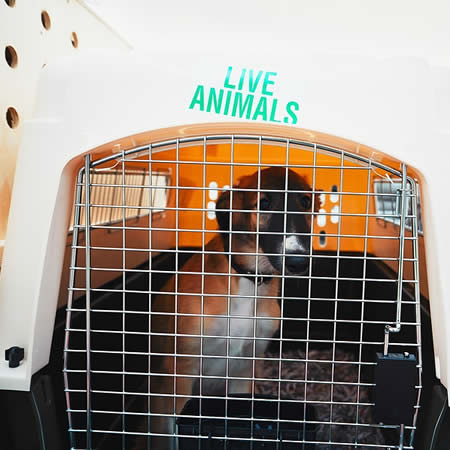
Three Ways Animals Fly — and When Cargo Is Required
How your animal travels depends on its size, the airline, and the destination country. Live animal cargo is the most common option for international moves and larger pets.
| Option | How it works | Best for |
|---|---|---|
| In the cabin | Small pet in a carrier under the seat, traveling with its owner. Fees and per-flight limits apply. | Small dogs and cats on routes and countries that allow it |
| Checked baggage | Pet flies in the hold on the owner’s ticket. Few airlines still offer it, often only for military travelers. | Limited cases — availability is shrinking |
| Live animal cargo | Pet flies as a booked cargo shipment in a temperature- and pressure-controlled hold, with its own air waybill. Many airlines accept it only through professional shippers. | Larger pets, pets flying without their owner, and countries that require cargo arrival |
Some countries require cargo. The United Kingdom, for example, requires most dogs and cats to arrive as cargo on approved routes. Each airline’s live animal policy is different — compare them in our Airline Cargo Guide.
What Our Live Animal Shipping Includes
- Route planning with the fewest connections and safest timing
- Airline cargo booking and air waybill
- Import permits and destination entry documents
- USDA-endorsed health certificates
- U.S. Fish & Wildlife Service clearance when required
- IATA-compliant crate, sized and labeled correctly
- Customs clearance support at origin and destination
- Door-to-door pickup, airport drop-off, and delivery
- Welfare oversight through every connection
- Status updates from pickup to arrival
The Rules Every Live Animal Shipment Follows
A live animal shipment has to satisfy the airline, the exporting country, and the importing country at the same time. These are the main rulebooks we work within:
| Authority | What it covers |
|---|---|
| IATA Live Animals Regulations | The airline industry standard for crate size, construction, ventilation, labeling, and handling of animals in cargo |
| USDA APHIS | Endorsement of export health certificates, and U.S. welfare standards for transporting animals |
| U.S. Fish & Wildlife Service | Declaration, inspection, and permits for wildlife and CITES-listed species entering or leaving the U.S. |
| CDC | Entry requirements for dogs coming into the U.S., including returning U.S. dogs |
| Destination authority | Each country’s import permits, vaccination and testing rules, and quarantine |
Regulated Animals: U.S. Fish & Wildlife Clearance, Permits, and Hybrid Cats
Some animals can’t travel on a health certificate alone. Hybrid and exotic cats, many birds, reptiles, and other wildlife fall under federal wildlife law and international CITES rules. For these moves, we coordinate directly with the U.S. Fish & Wildlife Service (USFWS), state wildlife agencies, and the destination country so your animal is inspected, permitted, and cleared before it flies.
How U.S. Fish & Wildlife clearance works
We manage each step and the timing between them.
- Confirm the statusWe check whether the species or hybrid generation is CITES-listed, federally regulated, or restricted by the state or destination.
- Secure permitsCITES export or import permits, state permits, and destination permits — in the right order. Allow 60–90 days.
- Declare the shipmentWildlife shipments are declared to USFWS and generally must move through a designated port.
- Inspection & clearanceUSFWS inspects and clears the animal before export or release, alongside the airline and customs.
Bengal & Savannah cats
Hybrid breeds — generation matters
- Early generations (close to the wild ancestor) can be regulated like wild cats and may need CITES documentation
- Registration papers showing the generation are often required
- Some destinations ban or restrict hybrids — Hawaii prohibits them
- We confirm the rules for your cat’s generation before booking
Exotic & wild cats
Servals, caracals, and similar species
- CITES-listed species need export and import permits
- USFWS declaration and inspection at a designated port
- State and destination ownership permits checked in advance
- Custom-built crates and airlines that accept the species
Birds
Parrots, raptors, and other species
- Many parrots are CITES-listed and covered by the Wild Bird Conservation Act
- Birds entering the U.S. usually need USDA quarantine
- Temperature- and stress-sensitive routing
Reptiles & other wildlife
Tortoises, snakes, lizards, and more
- CITES status varies by species — some need permits, others don’t
- Seasonal airline temperature restrictions
- Species-specific containers and handling
Start regulated moves early and have proof of legal origin. Permits can take 60–90 days, and authorities require documentation of how the animal was legally acquired, such as breeder records. For birds, reptiles, and small exotics, see our exotic pet shipping page.
Animals We Ship
How a Live Animal Shipment Works
-
Consultation and route plan
We review your animal, origin, destination, and date, then confirm the airline, route, and every document the move requires.
-
Permits and veterinary preparation
We coordinate vaccinations, tests, permits, and the health certificate with your vet, timed to the destination’s deadlines.
-
Crate and booking
We supply or check an IATA-compliant crate and book cargo space, avoiding extreme temperatures and long layovers.
-
Pickup and departure
We collect your animal from home or the vet, complete airline check-in and export clearance, and send you departure confirmation.
-
Arrival, clearance, and delivery
Our team or partner at destination handles customs and inspection, then delivers your animal home.
Long routes with connections? Major hubs such as Frankfurt, Amsterdam, and London Heathrow have dedicated animal care facilities where animals are watered, fed, and checked between flights. See our Global Pet Relocation Hubs guide.
Why Choose Across The Pond Pets
Award-winning and IPATA-accreditedRecognized with the IPATA Excellence Award 2025 and held to IPATA’s professional standards.
Paperwork done right the first timeMost delays and quarantines come from document errors. We check every certificate and permit before your animal travels.
Two West Coast gatewaysOur own teams at SEA-TAC and LAX, plus partners nationwide and worldwide.
You always know where your animal isA dedicated coordinator and updates at every stage, from pickup to delivery.
Live Animal Shipping FAQs
What is live animal cargo?
Live animal cargo means your animal flies as its own booked shipment, in a temperature- and pressure-controlled area of the aircraft hold, rather than on a passenger’s ticket. It’s the standard way to move larger pets and pets traveling without their owner, and some countries require it.
Can my pet fly without me?
Yes. Pets traveling without their owner fly as live animal cargo. Many airlines accept these shipments only through professional pet shippers, who handle the booking, crate, and documents.
Is it safe to ship a pet as cargo?
Live animals travel in temperature- and pressure-controlled holds and are handled under IATA standards. Risk is lowest with the right crate, direct or well-timed routes, avoiding extreme heat, and a healthy animal cleared by a vet — all things we plan for on every shipment.
What crate does my animal need?
An IATA-compliant crate sized so your animal can stand, turn around, and lie down naturally, with proper ventilation, secure fastenings, and live animal labels. We supply or check the crate. See our crate guidelines.
Do you ship animals other than dogs and cats?
Yes. We ship birds, reptiles, and small mammals, including species that need CITES permits and U.S. Fish & Wildlife Service clearance. These moves need more lead time, often 60–90 days for permits.
Can you ship a Bengal or Savannah cat?
Yes. The requirements depend on the cat’s generation and destination. Early-generation hybrids can be regulated like wild cats and may need CITES documentation and U.S. Fish & Wildlife clearance, and some destinations, such as Hawaii, prohibit hybrid cats. We confirm the rules for your cat before booking.
When is U.S. Fish & Wildlife Service clearance required?
When the animal is wildlife under federal law — including CITES-listed species, many birds and reptiles, exotic cats, and some early-generation hybrids. These shipments are declared to USFWS, generally move through a designated port, and are inspected before export or release. Dogs and domestic cats don’t need USFWS clearance.
Get a Quote for Live Animal Shipping
Choose the service that fits your shipment — or schedule a consultation if you’re not sure.
Full Agent Support
For animals traveling alone. We handle the full logistics and documentation from start to finish.
Request Full Agent SupportVeterinarian Document Assistance
Traveling with your pet in the cabin or cargo? We make sure every required document is correct and on time.
Get Document AssistanceCertification of U.S.-Issued Rabies Vaccination
Dogs returning to the U.S. from a high-risk rabies country need this USDA-endorsed form, completed before leaving the U.S.
Rabies Certification AssistanceMilitary Pets: PCS & Deployment
For active duty service members relocating or deploying. Priority scheduling around your orders.
Military Pet ShippingShip Your Animal With Confidence
Book a consultation and get a clear plan, route, and quote for your live animal shipment.
Schedule a Pet Travel Consultation